
You're Not Burnt Out, You're Just Crispy
Rewire your brain for success using the video game model and create an action plan that actually works.


By now, countless articles aimed at creative professionals have flooded our feeds, all tackling the topic of preventing burnout. And it should be a snap to just embrace mindfulness, decompress, and dial down the overwhelm, right?
Wake up on a schedule. Eat breakfast. Go for a walk. Have a routine. Journal your thoughts. Meditate. Talk to a friend. Go for a hike. Bubble baths. Self-care. Boundaries. Bareback unicorn rides into the sunset.
It seems easy enough to get into a consistent meal routine in theory, but for those that often forget to slurp down a protein shake between meetings, the thought of procuring and preparing ingredients for a healthy routine meal can feel impossible.
Then there are those of us who start art projects to relieve stress and subsequently spend the next month tripping over art supplies and stressing out about not finishing the very project that was supposed to help us unwind.
Life happens. Energy shifts. Priorities pivot.
Before you know it, the projects you carefully planned are pushed to the backburner, while an ever-growing list of tasks piles up, paving the way for burnout to creep in.
Sound familiar? Join me on the journey of taking thy brain from crispy to spongy. No unicorns required.
How To Jumpstart Your Brain 🧠
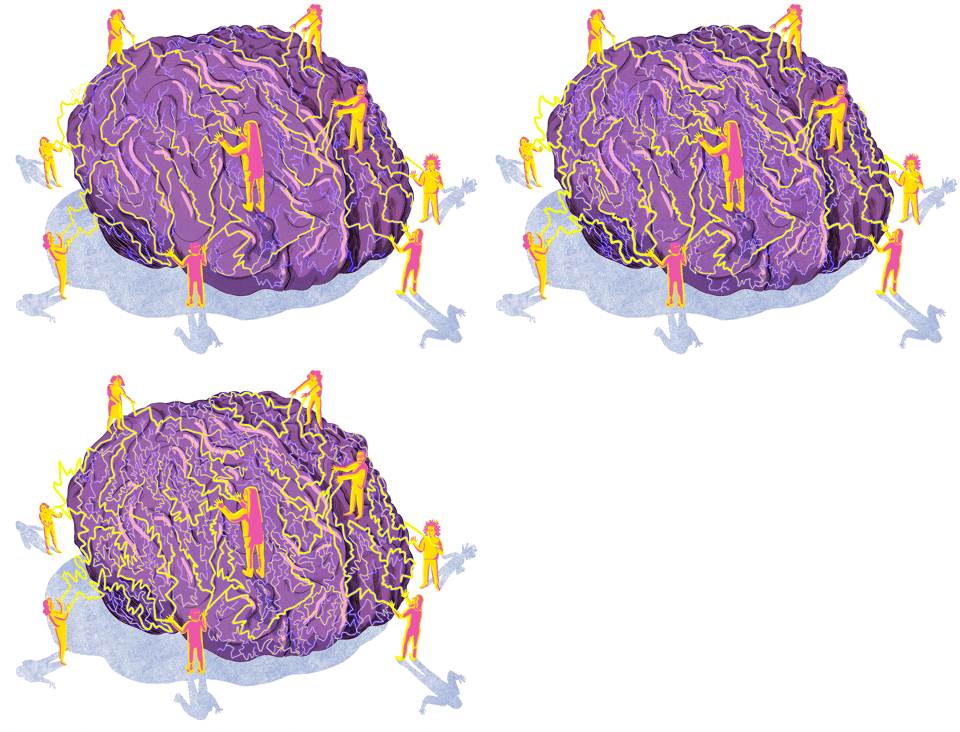
I have recently been reading up on all kinds of “life-hack” tips and tricks to disrupt the stress response and revitalize the creative parts of the brain.
One of the more interesting articles I read was written by neurologist Judy Willis, MD. In her article, she explains why the brain responds to stress in the way that it does, citing that “neurons that fire together, wire together” and prolonged stress can send your head on a one-way trip to survival mode:
“As you internalize your thwarted efforts to achieve your goals and interpret them as personal failure, your self-doubt and stress activate and strengthen your brain’s involuntary, reactive neural networks. As these circuits become the automatic go-to networks, the brain is less successful in problem-solving and emotional control. When problems arise that previously would have been evaluated by the higher brain’s reasoning, the dominant networks in the lower brain usurp control.”
In other words, if you fatigue your brain to the point of operating on autopilot, it’s going to default to less productive parts of your brain for problem-solving. More stress equals less productivity.
Dr. Willis proposes rewiring your headspace through a series of simple repetition that does not necessarily require hiking boots, yoga mats, or farm-to-table meals:
“You can activate the same neuroplasticity that gave dominance to the lower brain networks in the burnout state to construct a new, stronger default response. With more successful experiences achieving goals, you can reset the circuits that will direct your brain to access its highest cognitive resources for creative problem-solving. You can build up new, improved circuitry, switching your responses from retreat to IGNITE!”
And the best part is that creating new patterns for your tired brain is based on the video game model.
Happy Brains Hinder Creative Burn-Out
You don’t have to commandeer your kid’s Xbox and invest 80 hours in Call Of Duty just yet (Although I would totally support you if you did).
The video game model refers to creating a pattern of task completion that enables your brain to build up the good chemicals that increase creativity, motivation, and curiosity:
“The plan to guide you comes from the video game model that works because of three components: buy-in, achievable challenges, and frequent awareness of incremental progress enroute to the final goal.
Just as you work through board levels, mini-challenges, side quests, and bosses before you beat a video game, work, and life present much in the same way.
The video game model advocates that you clearly define and commit to a larger goal (The Buy-In) and establish smaller, more enjoyable but readily achievable tasks that will enable you to keep track of your progress and stay motivated and engaged to get to your end goal.
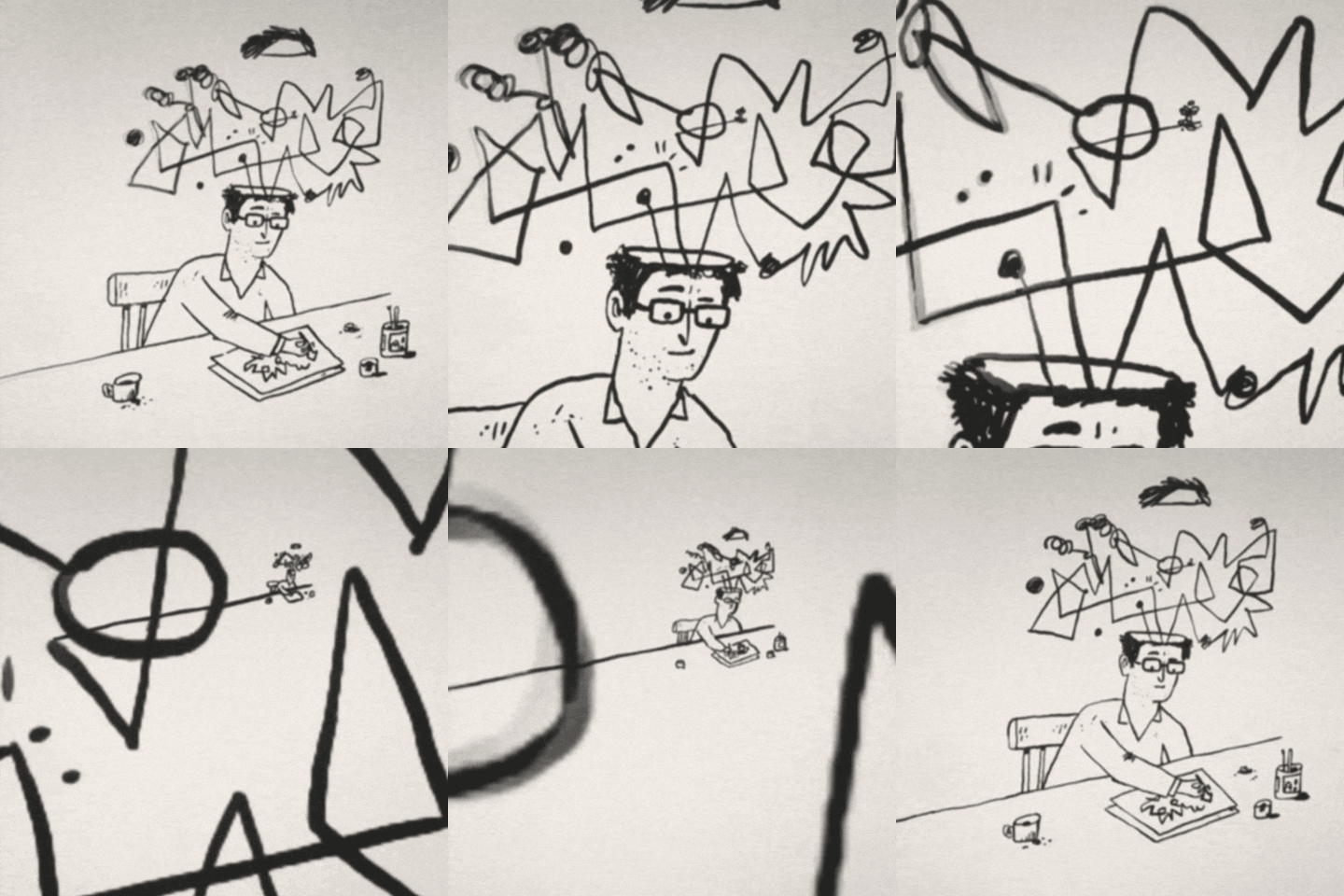
Repetition of task completion will increase your satisfaction, and this will establish a new brain pattern.
“…You’ll need to plan for your brain to experience frequent recognition feedback of incremental progress. You should set your “rewiring” goals by their desirability and by the goals’ suitability to be broken down into clear segments.
This way, you can chart your goal progress as you achieve each stepwise challenge. The pleasure burst of intrinsic motivation that will accompany your recognition of each progressive increment achieved in the goal pathway will keep your brain motivated to persevere.”
Pssst…Want to put your ideas into action?
Subscribe free to Microdoses of Creativity for more tips, tools, and resources to help you succeed as a creator and entrepreneur.
How To Deal With Burnout and Cure Creative Brownouts
With this information in hand, we can create our own personal roadmap from fried to restored. I’m sure many of you employ these tactics on the daily, but it’s good to have these concepts reinforced from the perspective of preventing and fixing burnout and brain fatigue:
Clearly define end goal (Buy-In)
Create a series of smaller, more easily achieved, and enjoyable tasks
Measure and track your progress
Celebrate the end goal
To-do lists and visual reminders of your end goal can prove most helpful in this process.
Create Your Burnout-Proof “Game” Plan
Need a jumpstart? The video game model can be applied to creative professionals and entrepreneurs in a number of relevant applications:
Identify & Learn a Skill For Your Small Business: Want to learn how to create your own podcast or start a video series? Don’t become overwhelmed by all of the options. Define your goal (“I want to create and upload my first podcast episode by July”) and then begin planning your next steps in bite-sized tasks, from guest curation to planned message. I personally like to start planning backward with the goal first and then condense all the tasks down to the very first step.
Expand Your Network: Want to rub shoulders with other creative professionals, artists, and entrepreneurs? Think about what you hope to gain from networking: More clients/customers/collectors? More money? More connections? Now start thinking about where this type of network resides, online or off. It could be a professional group within your community, an online forum, or even an area coffee shop that hosts art exhibitions or creative events. Clearly define who you want to meet, what you hope to achieve in expanding your network, and how you plan on sustaining your efforts. You can then begin planning your dance card for new introductions and networking.
👀 Continued Reading
🔗 “How to Rewire Your Burned-Out Brain: Tips from a Neurologist”, Edutopia

Hustle Culture, Meet Slow Productivity

Hustle culture. We’ve all heard about it at this point, right?
Rich in value and a lot of newly coined words. Well researched!
The personal roadmap strategy is brilliant, to break the larger endeavour down into simpler bite sized steps. Celebrating small wins along the way keeps us motivated.