
How to Map Your Most Creative Year Yet: A 2026 Planning System for Multi-Passionate Creators
Learn how to plan with a flexible 2026 system designed for multi-passionate creators, realistic goal-setting, and sustainable momentum.

If I have one thing to impart before the New Year to my fellow creatives feeling the pressure of doing all the things, it is this:
Planning isn’t the opposite of patience. It’s how patience becomes progress.
If you’re a multi-passionate creator, traditional planning advice maybe hasn’t worked for you; Linear plans assume focus moves in a straight line and creativity rarely moves this way.
You don’t need fewer ideas. You need a system that can hold more than one.
This is the planning approach I’m using as I look toward 2026.
It’s not necessarily about “doing” more. It’s about working with your creative energy instead of against it.
About Last Week…
Progress Without Pressure: The Space Between Intention and Execution

You’re not behind. You’re recalibrating.
Why Traditional Planning Falls Apart for Multi-Passionate Creators
Most planning systems are built around rigid timelines, singular goals, and constant output. That structure can feel motivating at first, then slowly turn into pressure.
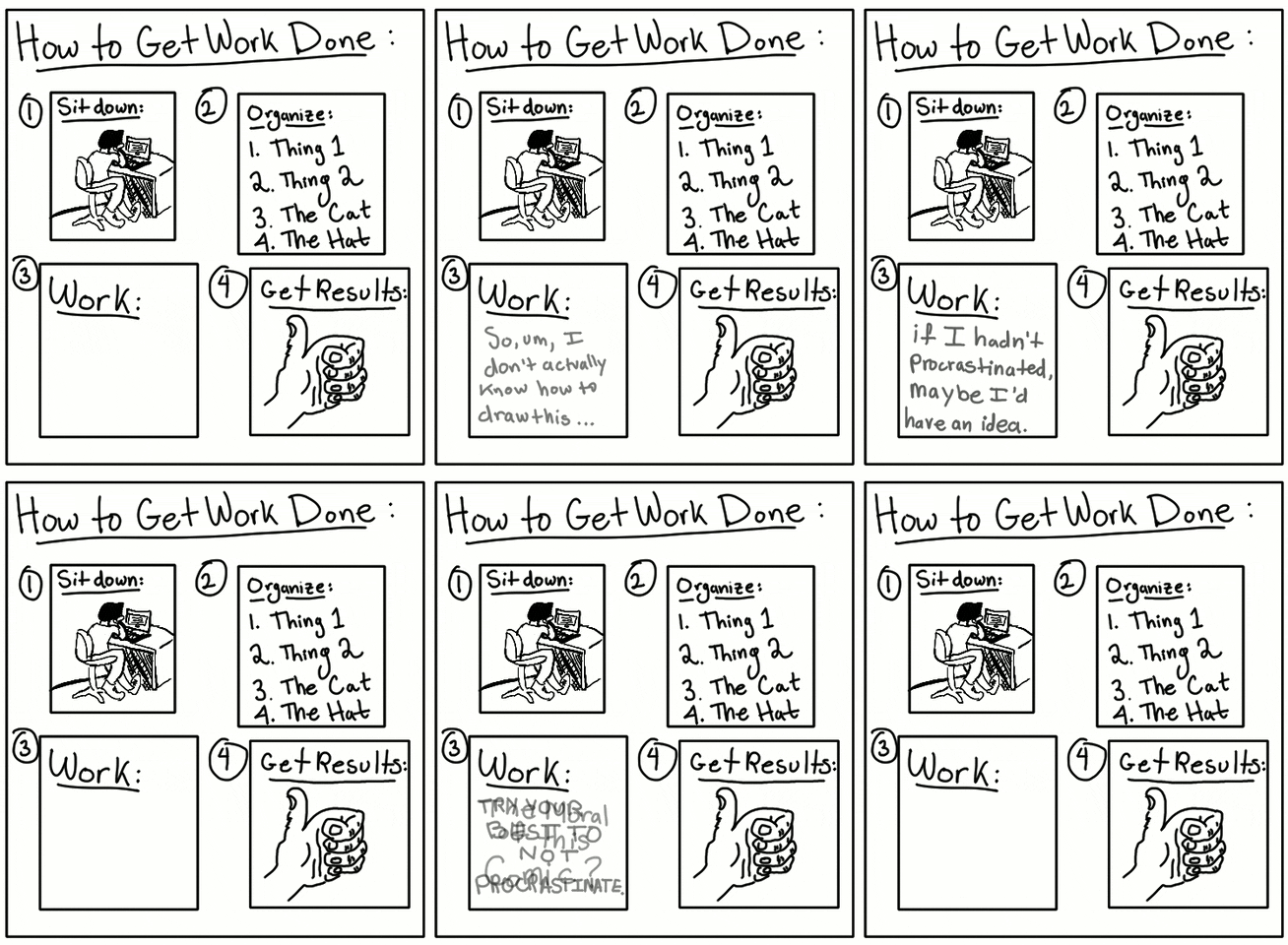
For multi-passionate creators, the problem is not a lack of discipline. It’s that:
Creative energy comes in cycles
Multiple projects compete for the same bandwidth
Interests evolve throughout the year
Life rarely follows the plan on paper
When planning doesn’t account for this, it creates guilt instead of clarity.
A better system allows for movement, adjustment, and honest check-ins.
A Flexible Planning System for 2026
This system focuses on orientation instead of control. Think of it as a map rather than a schedule.
The five parts:
Creative Focus Areas
Anchor Projects
Seasonal Planning
Minimum Viable Progress
Built-In Reflection
Each piece works together to support momentum without pressure.
Step 1: Define Your Creative Focus Areas
Instead of starting with goals, start with areas of attention.
Creative focus areas are the parts of your work and life that matter to you, regardless of how fast things move.
Examples:
Writing or publishing
Teaching or workshops
Client or consulting work
Learning and skill-building
Personal creativity or rest
These areas give you stability. Even when projects shift, you still know where your energy belongs.
Step 2: Choose Your Anchor Projects
Anchor projects are the few initiatives that deserve protected time and energy. They move your work forward in a meaningful way.
Limit this to one to three projects for the year.
Anchor projects should:
Align with your larger vision
Have a clear outcome
Feel important but sustainable
Everything else becomes flexible, seasonal, or optional. This alone removes a lot of pressure.

Step 3: Plan In Seasons, Not Months
Creativity doesn’t operate on a twelve-month grid. Seasons allow for focus and rest to coexist.
Try thinking in quarters or creative seasons:
A season for deep work
A season for visibility and sharing
A season for learning or experimentation
A season for recovery or recalibration
You’re not locking yourself in. You’re giving your energy somewhere to land.
Step 4: Redefine Success With Minimum Viable Progress
Progress doesn’t have to be maximal to be meaningful.
Minimum viable progress is the smallest version of consistency that still moves things forward.
Examples:
One thoughtful post per week
One workshop per quarter
One habit that supports your creativity
This approach protects momentum without demanding perfection.
Step 5: Build in Reflection Loops
The most important part of this system is permission to adjust.
Set regular check-ins and ask:
What’s working right now?
What feels heavy or draining?
What needs to change?
Reflection keeps your plan alive instead of static.
Try This:
✅ Set reminders to check in with yourself using Google Tasks on your Google Calendar
✅ Use a free Loom account to record your reflection sessions on mobile or desktop; You can set the privacy settings up to where only you can access it.

Your Most Creative Year Won’t Come From Doing More
It will come from choosing what deserves your energy and allowing your plan to evolve as you do.
Planning doesn’t need to feel restrictive. When done well, it becomes a form of self-trust.
You’re not behind. You’re building something sustainable.
Q For You:
Where do you feel called to create more space for in 2026?


Very timely post.
Ficus gas been my problem in the past, and I've been doing the work of keeping my head focused on one project and setting up a system to support it.
I like it. I am more of a traditional planner, but I, too, have trouble sticking to the main project.